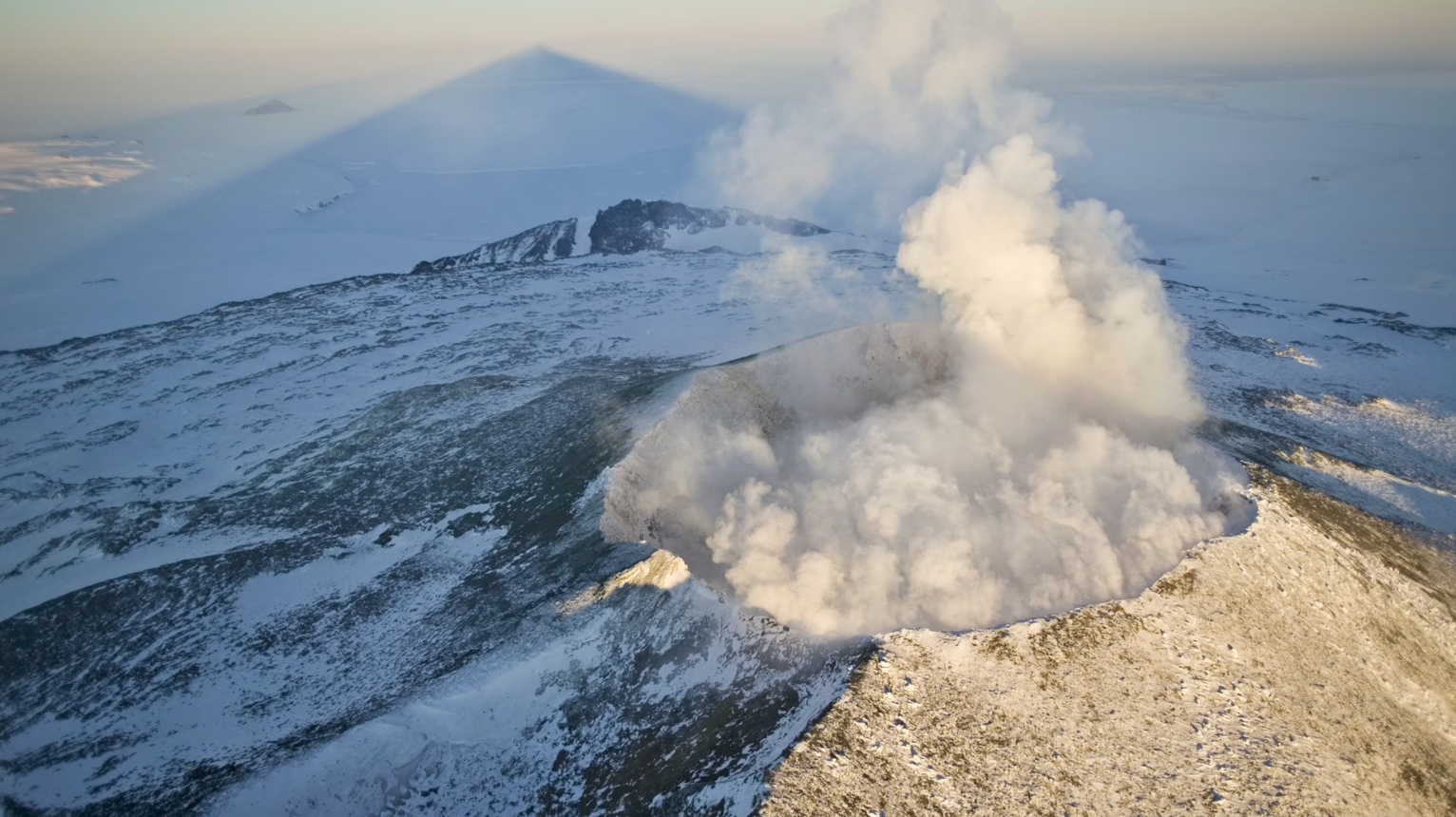
Melting ice sheets in West Antarctica could trigger powerful volcanic eruptions, creating a dangerous feedback loop that accelerates sea-level rise. (CREDIT: George Steinmetz / CORBIS)
Melting Antarctic ice sheets may trigger volcanic eruptions, accelerating global sea-level rise through a dangerous feedback cycle.
Joseph Shavit
Published Apr 5, 2025 1:07 PM PDT
When volcanic eruptions make headlines, the images often depict fiery lava and towering ash clouds. But beneath Antarctica’s frozen landscape, volcanoes quietly shape Earth's climate in surprising ways. Recent scientific studies reveal that melting ice sheets in West Antarctica might trigger volcanic activity, creating a cycle that speeds up ice loss and sea-level rise.
Scientists studying Earth's geological past have found that volcanoes covered by ice sheets react strongly when the ice melts. As thick ice disappears, it removes a heavy weight from the surface. The land underneath then lifts slightly, easing pressure on magma chambers hidden deep within the Earth. This process, called isostatic rebound, can push magma upward, causing eruptions that further melt the ice above.
Ice Sheets, Volcanoes, and Climate
West Antarctica, home to one of Earth's largest ice sheets, sits atop a volcanic hotspot known as the West Antarctic Rift. This region contains over 100 volcanic centers—many hidden beneath ice layers thousands of meters thick. The ice not only hides these volcanoes but also stabilizes them. Its massive weight holds magma chambers under control, preventing frequent eruptions. But when climate change thins the ice, this balance is disrupted.
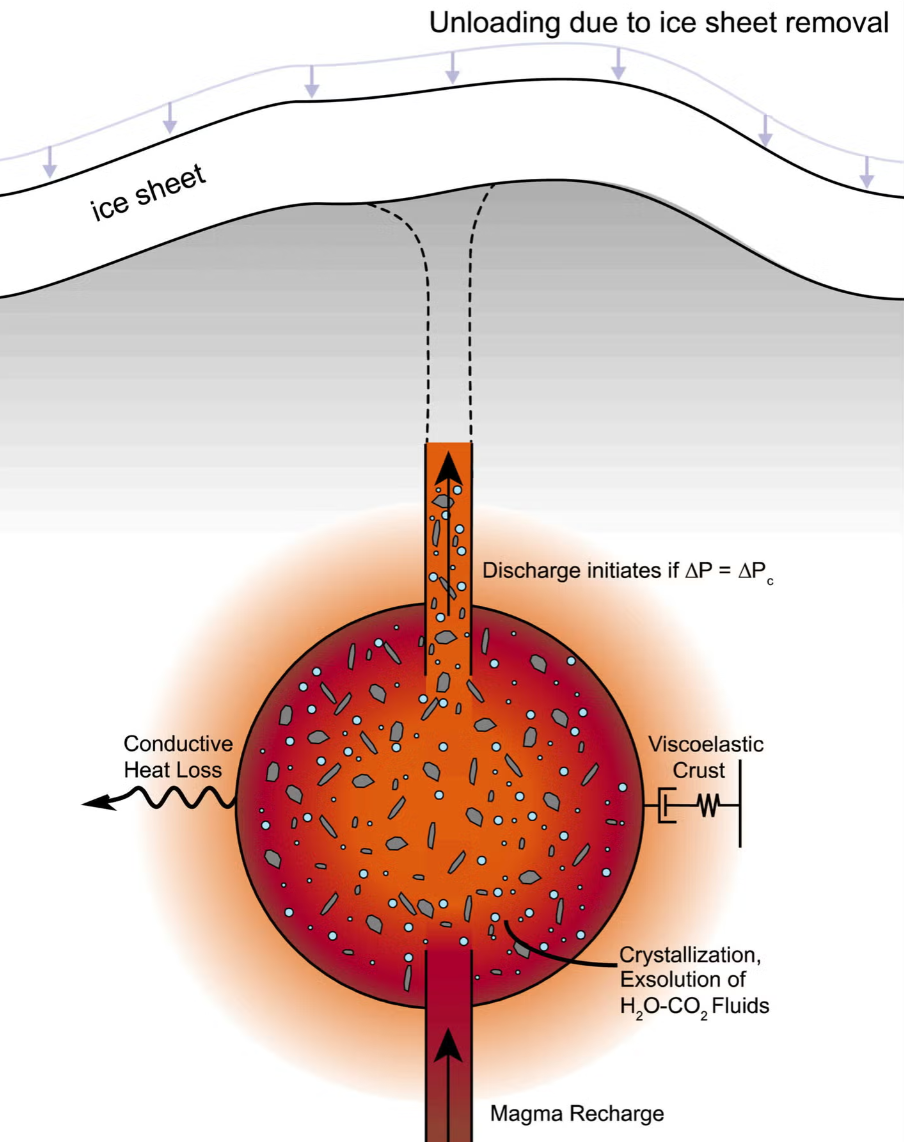
Schematic of the thermomechanical magma chamber model with simulated ice unloading from this study. Transparent arrows represent ice unloading as a decrease in the ice layer thickness over time. (CREDIT: Geochemistry, Geophysics, Geosystems)
Researchers recently used computer simulations to study how shrinking ice sheets impact these hidden volcanic systems. They discovered that the rate at which ice disappears greatly affects volcanic behavior.
Faster melting reduces pressure quickly, allowing magma chambers to expand and push magma upward. This increased volcanic activity melts even more ice, creating a dangerous feedback loop that could speed up global sea-level rise.
Dr. Allie Coonin, a researcher at Brown University who led the study, explains the process clearly: "As the ice melts away, the reduced weight on the volcano allows the magma to expand. It applies pressure upon the surrounding rock that may facilitate eruptions."
The consequences of this interaction are significant. When magma chambers deep beneath ice sheets expand, dissolved gases—mostly carbon dioxide and water—begin forming bubbles. These bubbles increase pressure within the magma, making eruptions more likely and potentially more intense. In essence, the melting ice sheet opens the door for explosive volcanic activity.
Lessons from the Andes
To understand how glaciers influence volcanoes, researchers also looked at volcanic records from the Andes mountains in South America. Around 18,000 years ago, large ice sheets covered volcanoes in Patagonia. As Earth's climate warmed naturally, ice sheets melted rapidly, triggering a series of volcanic eruptions. The timing of these eruptions strongly matches periods when ice was retreating fastest.
This historic pattern confirms the researchers' models: melting glaciers can directly lead to increased volcanic eruptions. According to Coonin, volcanic systems react quickly once pressure is reduced. "We found that the removal of an ice sheet results in larger eruptions," she says. These bigger eruptions release more heat, accelerating ice melt even further.
Today, Antarctica is experiencing conditions similar to Patagonia’s past. Satellite measurements show ice thinning rates up to 3 meters per year in certain West Antarctic areas, a rate scientists consider alarmingly fast. If current melting continues—or accelerates—it could trigger substantial volcanic activity beneath the ice.